



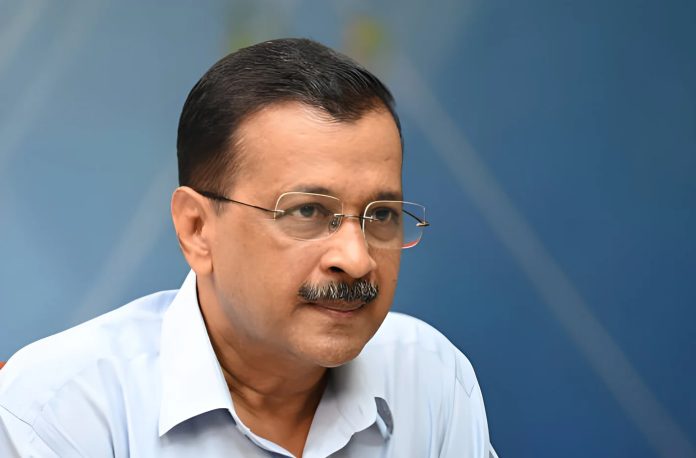
The Delhi High Court has issued a fresh notice to Delhi Chief Minister Arvind Kejriwal regarding the Enforcement Directorate’s (ED) plea challenging his acquittal in two separate summons cases related to the excise policy. The notice comes ahead of a scheduled hearing on July 22, where the court will revisit the circumstances surrounding Kejriwal’s non-appearance before the ED despite multiple summonses.
Justice Swarana Kanta Sharma pointed out that the registry indicated that the previous notice issued to Kejriwal had not been served. The ED’s counsel revealed that a notice was sent to Kejriwal on April 1, yet no representation was made on his behalf.
Justice Sharma stated, “The registry reports that (he is) not served. I will issue fresh notice. Respondent has not been served,” thereby ensuring that legal processes are followed before proceeding further.
The legal troubles for Kejriwal stem from an ED complaint, which alleges that as Chief Minister, he intentionally disobeyed summons to appear for questioning related to the excise policy case. The case revolves around accusations that he failed to comply with investigations and raised trivial objections to his summons.
The ED’s argument claims that the trial court made a “grave error” in acquitting Kejriwal, highlighting that there was no dispute regarding the issuance and receipt of summons, yet the former chief minister failed to appear before the agency.
The trial court, in its ruling passed on January 22, determined that the ED could not prove that Kejriwal intentionally neglected the summons. The court noted, “Neither the service of summons through emails has been proved by the ED nor has the process of issuing summons to any person under Section 50(2) of the Prevention of Money Laundering Act (PMLA) via email been proved to be in accordance with the law.”
The ED’s allegations detail that other individuals implicated in the case were allegedly in contact with Kejriwal regarding the now-repealed excise policy, which purportedly resulted in undue benefits and kickbacks to the Aam Aadmi Party (AAP).
Currently, Kejriwal is on interim bail in the money laundering case, with the Supreme Court referring pivotal questions regarding the necessity of his arrest under the PMLA to a larger bench for comprehensive evaluation.
Furthermore, on February 27, the trial court discharged Kejriwal, former deputy chief minister Manish Sisodia, and 21 others involved in the liquor policy case, asserting that the Central Bureau of Investigation (CBI) case lacked legal standing and failed to withstand judicial scrutiny.
The CBI’s appeal against this discharge is still pending before the high court, setting the stage for a complex legal battle ahead.